Loading...
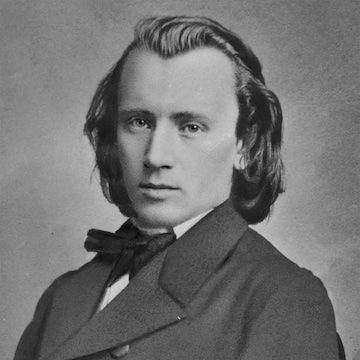
Brahms's music moves us through its depth, its melancholy and its perfection of writing. It flourishes especially in the Lied and chamber music. Nourished by popular inspirations and the charm of Viennese waltzes — including those of Johann Strauss, whom he so admired — Brahms also excels in this register, which he approaches with elegance, grace and lightness.
Book a ticket for this concert or get a pass for the full week.
By buying a week pass you become a Friend of the Festival and help fund passes for students, teachers, and families.
This monumental work exists in three versions: a string quintet, the Piano Quintet Op. 34, and this two-piano sonata (Op. 34b, 1864). Clara Schumann preferred the two-piano version for its orchestral richness. The sonata unfolds across four movements of symphonic scope: a dramatic opening Allegro, a profoundly lyrical Andante, a fiery Scherzo, and a rondo finale that alternates between tenderness and brilliance.
Composed in 1865, these sixteen waltzes pay tribute to Vienna's waltz tradition and to Johann Strauss, whom Brahms greatly admired. Written for piano four hands, they range from exuberant to tender, from boisterous to wistful. The famous fifteenth waltz in A-flat major is among the most beloved melodies in all of Brahms's output. The set captures the charm, elegance and intimacy of domestic music-making.
Brahms was one of the great Lied composers, writing over two hundred songs. "Spanisches Lied" (Op. 6, No. 1) evokes Spanish passion with a rhythmic guitar-like accompaniment. "Liebestreu" (Op. 3, No. 1), his very first published song, is a dialogue between a mother and daughter about faithful love. "In stiller Nacht" (WoO 33, No. 42) is a deeply moving folk-song arrangement, one of Brahms's most intimate vocal pages.
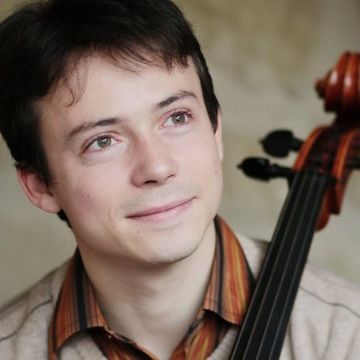
Completed in 1865, the First Cello Sonata is steeped in the spirit of Bach. Its opening movement sings with a broad, noble melody in E minor. The central Allegretto quasi Minuetto provides graceful contrast, while the fugal finale pays explicit homage to Bach's Art of Fugue. The sonata is a masterpiece of the cello-piano repertoire, balancing intellectual depth with lyrical warmth.